
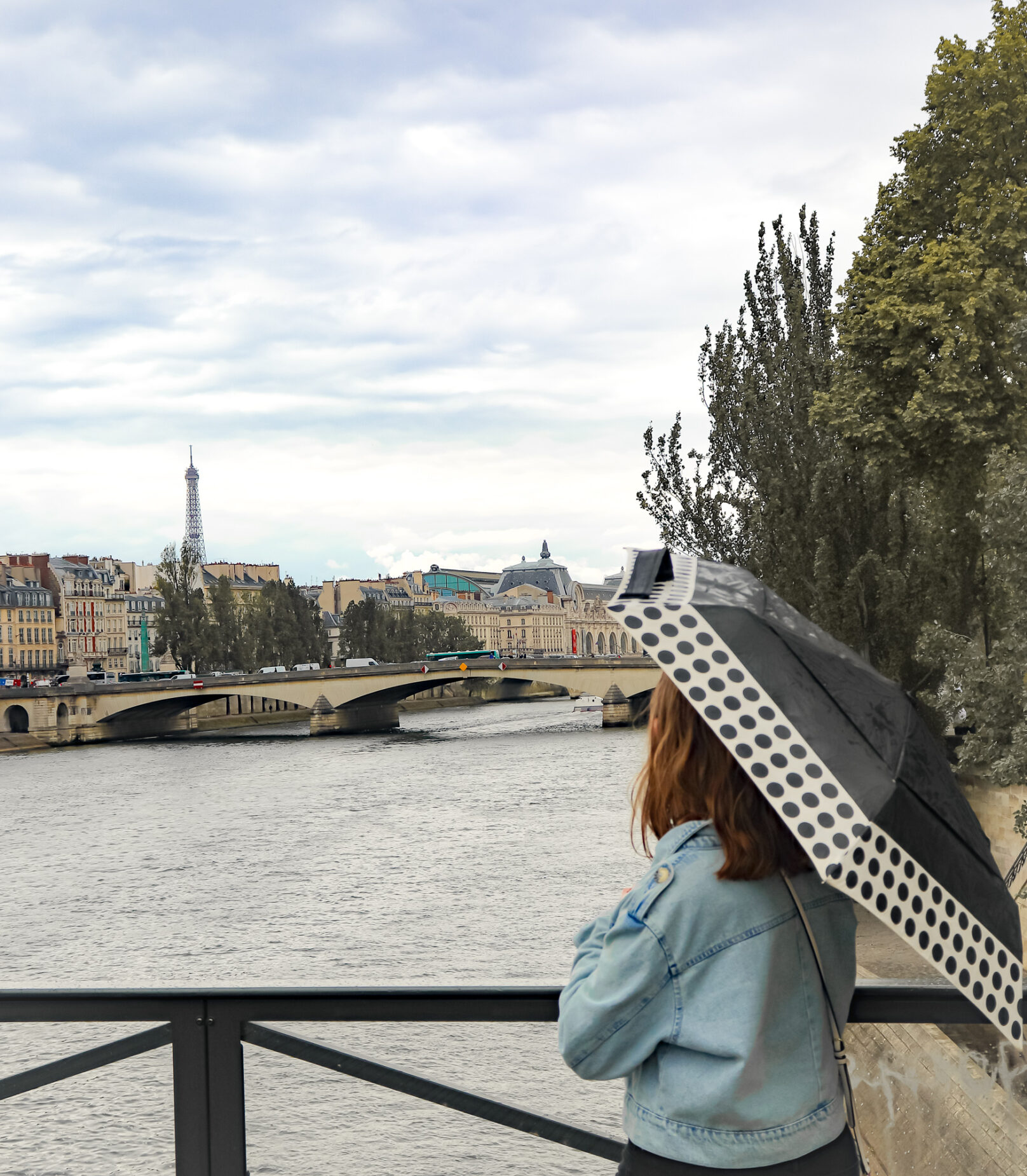
Before I traveled to Paris, I’d heard so much about this special bridge where lovebirds would “lock their love.” Upon visiting the infamous bridge, I came to a stark realization: all of the locks were gone. Besides a few light posts with locks strung at their bases, the bridge was almost unrecognizable without its thousands of padlocks. How did the tragic fate of the padlock bridge come to be? I decided to do some research.
The Pont des Arts Bridge of Today
….isn’t the original. The original bridge’s construction ended in 1804 and it was the first iron bridge in Paris. It was originally a bridge built for pedestrians and eventually, it became a national historic monument. Over time it had endured both war and the test of time. Upon inspection, it was deemed unsafe and rebuilt in 1984 after a substantial collapse.
So, the Pont des Arts of today was crafted in the image of the original. But, rather than inflicting damage from the World Wars, the bridge has been subject to a different kind of hazard. That’s correct, a new threat had emerged: love-locking padlocks.
The Rise of the Love Locks
It is noted that the trend of lovers locking their love with padlocks originated in 2008, but the tradition of locking love and throwing the key in the Seine isn’t a French practice at all. In fact, many Parisians found the locks to be a cosmetic issue. As time progressed and tourism flourished, the Pont des Arts became the foundation for thousands and thousands of locks. In 2014 there were an estimated 700,000 locks on the bridge, but the number could have been much higher. Some estimate a million or so locks made the bridge their home.
The accumulation of so many locks had begun to damage the bridge extensively. One padlock is one thing, but multiply it by 700,000 and you’re talking about tons of weight. Many estimations place the weight of the locks at about the same as 20 elephants. Let’s do the math.
Let’s say that one elephant is 12,000 pounds. 12,000 x 20 = 240,000 pounds. 1 ton = 2,0000 pounds. Now, I’m no math major, but 240,000 / 2,000 = a lot of tons. 120 tons, to be exact.
It’s understandable that the locks were starting to weigh down the bridge. In fact, in May 2014, part of the bridge collapsed from the weight. The act of securing a couple’s love by adding a padlock to the bridge had evolved from a loving gesture into a potential hazard. In 2015, the mayor of Paris decided it was time to start removing the padlocks and spreading a campaign to dissuade tourists from contributing to the problem.
How Else Can We Express Our Love?
Don’t get me wrong, using padlocks to lock a couple’s love is still extremely popular among tourists, and I wish I’d known how real the problem was before I traveled to Paris. The fact is, cities are being damaged by the weight of the padlocks, and Paris is just one of many of these cities. The campaign “Love Without Locks” has a catchy sound to it, and Paris hoped its message would carry a certain message: love is love even without a lock to secure it.
Selfies and other nondestructive actions have been encouraged since the campaign began, even so, there’s something satisfying about the ritual of locking love. So go for it, buy yourself a padlock if you and your significant other wish, but make sure you aren’t leaving it behind in Paris. Instead, you can take your lock to the bridge and capture a picture of it over the river with the Eiffel Tower peeking in from the behind. Then, take the lock with you! Not only can you say you have a picture of your lock, but you’ll also physically have your lock as well!
That sounds better than leaving it to be cut off and thrown away, doesn’t it? After all, trash heaps aren’t so romantic, and it’d be tragic for a symbol of love to end up labeled as trash.
Today, I still have my lock from Paris (I didn’t throw the key into the Seine, after all!) and a cute photo and gif to accompany it.
For more information on love locks and the Pont des Arts, see The History of an Icon.